Spinning the Wheel - How Optimization Fuels Continuous Improvement in Aviation

Continuous improvement is a wheel!
Always turning, always feeding itself.
In aviation, one of the most powerful entry points into that wheel is schedule optimization. Done right, it sets off a chain reaction that reaches every corner of an operation.
1. Optimize the Schedule → Optimize the Fleet
Every schedule is a decision about aircraft movement. Smarter schedules mean fewer positioning flights, better routing, and aircraft spending more time generating revenue. Fleet utilization rises, and downtime shrinks.
2. Fleet Optimization → Crew Optimization
A well-positioned fleet only works with a qualified, rested crew attached to it. When schedules are optimized, crew planning follows naturally: fewer last-minute swaps, reduced fatigue risk, and smoother workflows overall. The human side of the operation works in sync with the fleet.
3. Crew & Fleet Optimization → Cost Reduction
Efficient schedules cut costs on multiple fronts: less time spent on scheduling and rescheduling manually, fewer overnight stays for crew, and maintenance events are built into the plan instead of disrupting it. Costs shrink, margins grow.
4. Cost Reduction → Strategic Focus
When firefighting subsides, leadership can turn their attention back to the bigger picture. Teams stop reacting to problems and start shaping the strategy. That's when optimization stops being a tool and becomes a culture.
5. Strategic Focus → Continuous Improvement
Data from optimized operations feeds back into the system. Each cycle makes the wheel spin smoother, identifying new gains, preventing old mistakes, and building a compounding effect. Optimization doesn't end, it feeds itself.
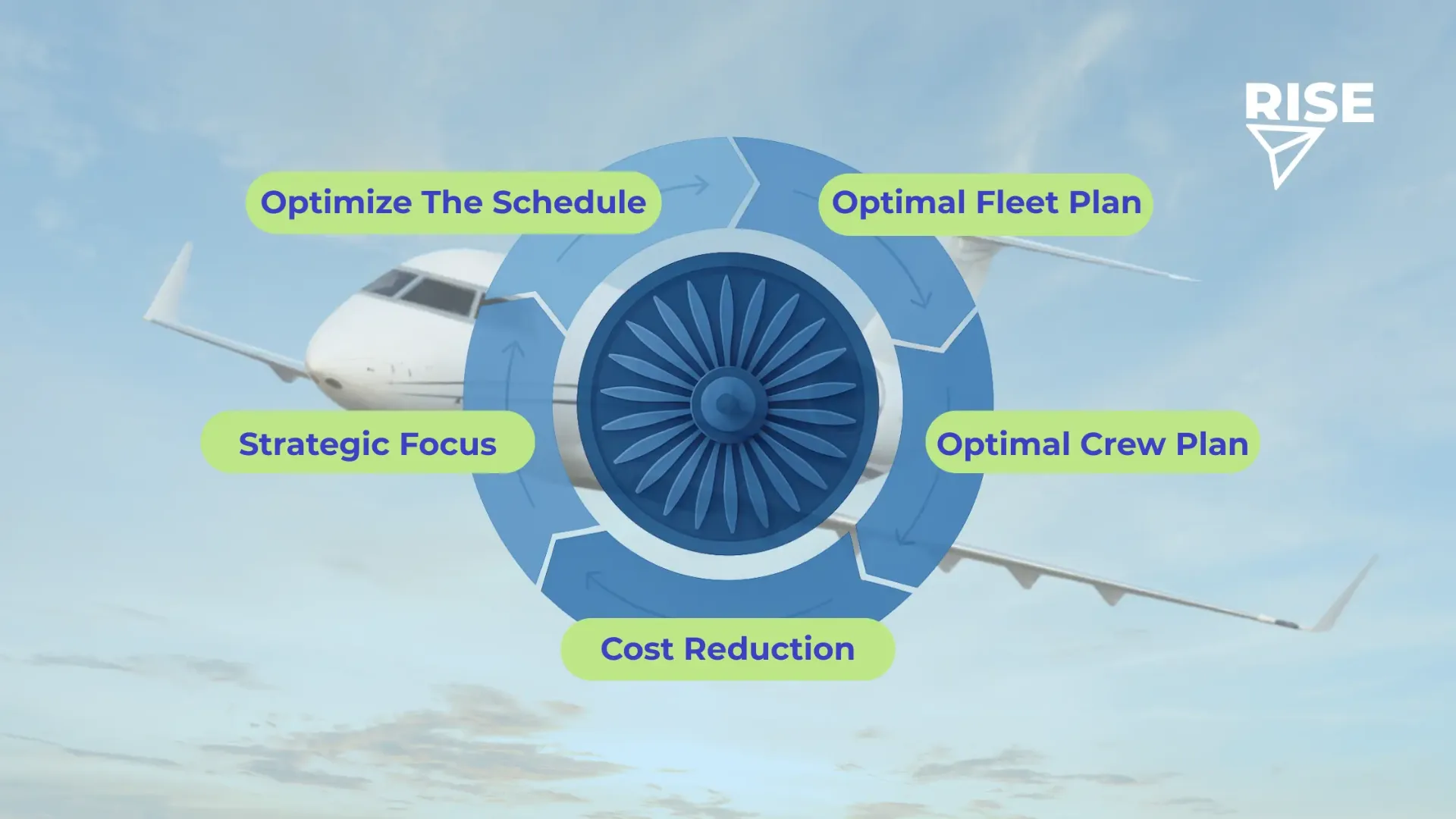
Business aviation's wheel of continuous improvement
Think of optimization as the force that keeps the continuous improvement wheel moving. Once it's in motion, every turn unlocks more efficiency, resilience, and value.
The question becomes: how fast you can keep it turning?
Related Articles
Rising Jet Fuel Prices: Why Every Non-Revenue Leg Matters More
Rising jet fuel costs change the economics of every request, aircraft assignment and positioning flight. Here is what operators can control.
Read more
Your Fleet Should Not Depend on One Person
Flight departments often run smoothly until the one person everyone relies on is unavailable. That dependency is structural — and costly.
Read more
The Hidden Planning Pressure in Multi-Aircraft Operations
In multi-aircraft operations, the coordination effort required to keep schedules stable is invisible — but its financial consequences are not.
Read more